 Introduction
If you’re investing in custom software development, you probably assume you’ll fully own your project once it’s complete.
Unfortunately, that’s not always the case.
Some development companies use vendor lock-in tactics — intentional or not — that make it difficult, expensive, or even impossible for you to work with another team in the future.
This article will explain:
-
What vendor lock-in in software development looks like
-
Why it happens
-
The risks to your business
-
How to protect yourself and your investment
The Problem: When Your Project Isn’t Really Yours
Vendor lock-in in software development happens when an agency or freelancer structures your project so you can’t easily move it elsewhere.
Common warning signs include:
-
Private servers only they control — no direct access to your project files.
-
No Git or version control repository you own — no history of changes, no way to track work.
-
Proprietary “packaged” code — modules or features only they can maintain.
At first glance, everything might seem fine. You get a working product.
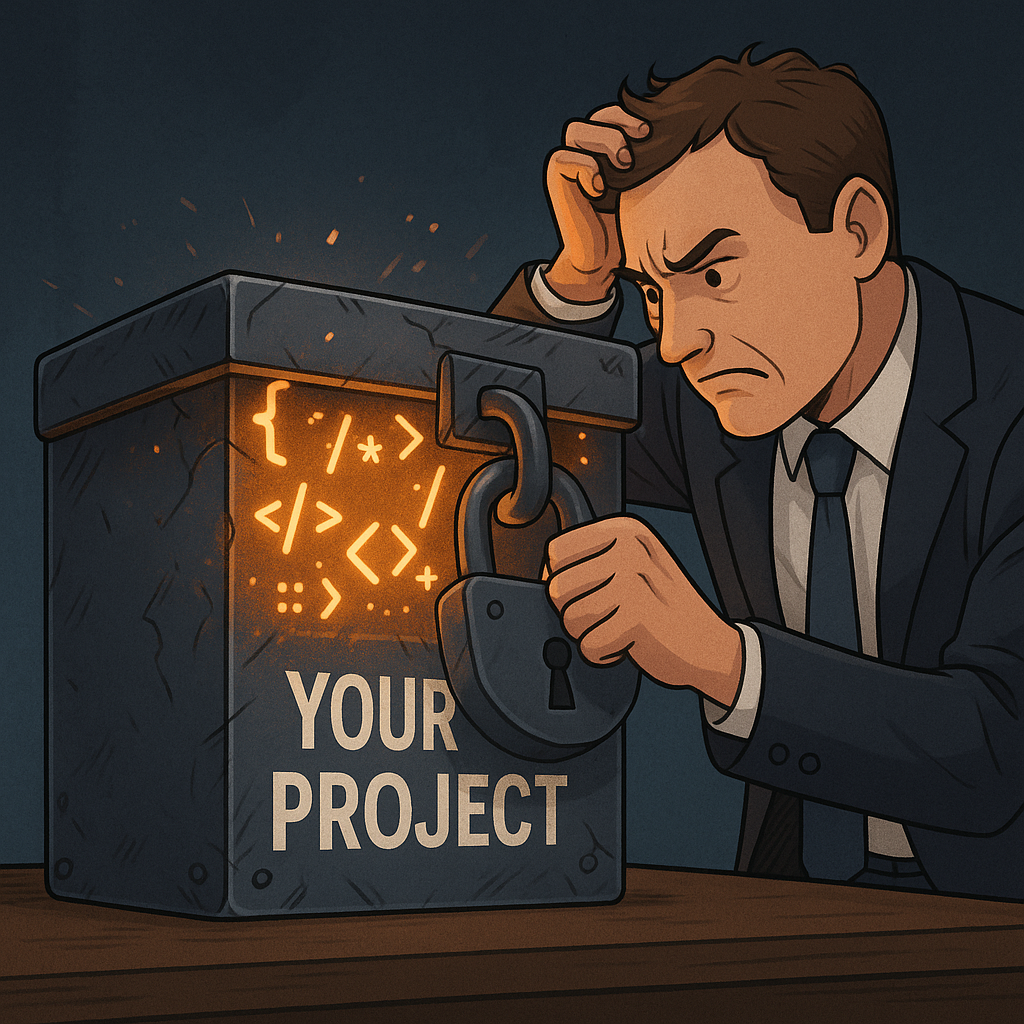
But in reality, you’ve been handed a locked box with no key.
When you try to continue development with a new team, you may face:
-
Costly rewrites because the source code is inaccessible or unusable.
-
Weeks of delays while the new team rebuilds missing parts.
-
Potential legal disputes over intellectual property ownership.
Why This Happens
There are usually two reasons:
1. Malicious Vendor Lock-In
Some companies do this deliberately to keep clients dependent on them. If you can’t easily leave, you’re forced to return for future work.
2. Poor Development Practices
Other times, it’s not malicious — it’s simply a lack of professional process. They might not be used to sharing repositories or documenting code, but the result for your business is the same:
Loss of control, time, and money.
The Risks to Your Business
Vendor lock-in can:
-
Increase costs for future updates and maintenance
-
Delay critical improvements to your product
-
Put your intellectual property at risk if ownership is unclear
-
Limit scalability because you’re tied to one team’s capabilities
In the worst cases, you may have to start over from scratch, losing months or even years of work.
The Right Way to Handle Software Ownership
A professional and ethical development partner will:
✅ Use shared Git repositories where you are the owner
✅ Provide full access to source code, version history, and documentation
✅ Clearly define IP ownership in the contract (you own it all)
✅ Structure code so any qualified developer can continue the work without delays
At LampProgramming, we believe your project should always remain yours — no matter who builds it.
How to Protect Yourself Before You Start
Before signing a contract, ask your development partner one key question:
“If I change teams, will I still own 100% of my code and history?”
If they hesitate or can’t give a confident “yes”, that’s a red flag.
Also:
-
Request that your project’s repository be created under your own GitHub/GitLab/Bitbucket account.
-
Ensure IP ownership clauses are clear in the agreement.
-
Ask for documentation of the setup, dependencies, and deployment process.
Final Thoughts
Your software is a long-term investment. Don’t let poor practices — or worse, deliberate lock-in — put your business at risk.
The right partner will not only deliver your project but will ensure you own it entirely, so you can take it anywhere, anytime.
Need a development team that works transparently and puts you in control?
📩 Contact LampProgramming — let’s build something you’ll truly own.